
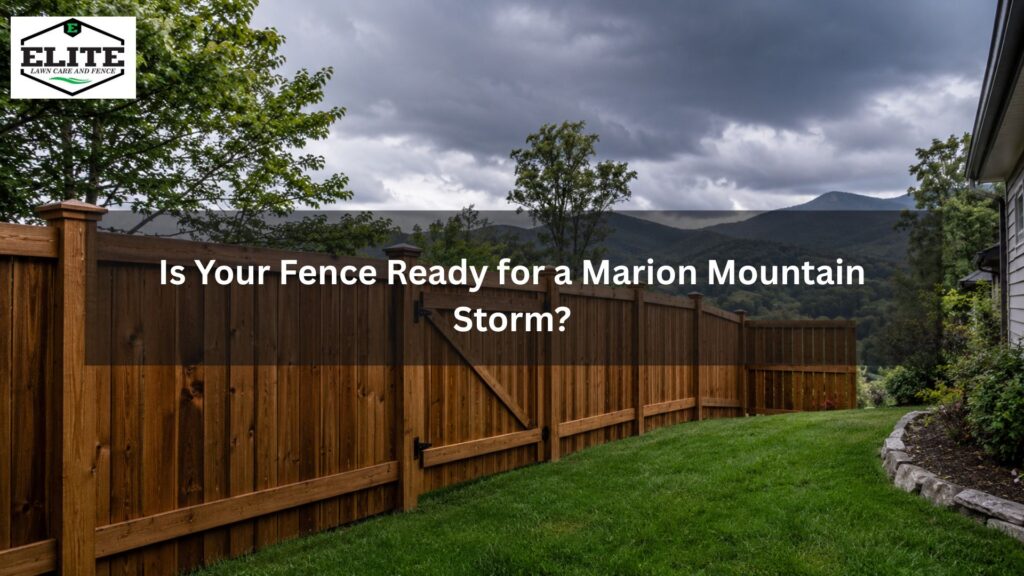
A fence can look solid on a calm day and show every weak spot after one hard storm.
In Marion, fences often deal with sloped yards, heavy rain, wind, soft ground, trees, and older wood that has already seen years of weather. The problem is that many fence issues stay hidden until the next storm pushes on the posts, soaks the soil, or knocks loose the parts that were already starting to fail.
A good storm-ready fence is not “storm-proof.” No fence can promise that. But a fence with strong posts, secure gates, solid rails, and a clear drainage path is usually better prepared than one with loose sections and ignored repairs.
Key Takeaways
- Storms often reveal weak fence posts, loose gates, soft soil, and damaged boards.
- The fence posts matter more than the panels because they hold the whole structure upright.
- Gates should be checked before heavy rain and wind because they move more than the rest of the fence.
- Older wood fences need extra attention around the ground, rails, and gate areas.
- Small repairs before bad weather can help prevent larger fence problems later.
Start With the Fence Posts
Fence posts are the first thing homeowners should check before storm season. Panels may be the part people notice first, but the posts are what keep the fence standing.
A fence post may need attention if:
- It leans to one side
- It moves when pushed
- The soil around it feels soft
- The base looks washed out
- The wood feels soft near the ground
- The attached panels no longer line up
- The gate attached to it no longer closes correctly
One weak post can put pressure on the sections beside it. During heavy rain or wind, that pressure can become more obvious. A fence that looked “a little crooked” before the storm may lean much worse afterward.
If multiple posts are leaning, the issue may be more than a simple cosmetic problem. It may mean the fence is losing support across the line.
Check Gates Before the Storm Does
Gates are one of the most common fence problem areas because they move more than the rest of the fence. They swing, latch, carry weight, and depend on strong posts to stay aligned.
Before a Marion storm, homeowners should open and close each gate and check if it still works smoothly.
Look for:
- A gate that drags on the ground
- A latch that does not line up
- Loose hinges
- A gate post that leans
- A gate that swings open by itself
- A frame that looks twisted
- Gaps that have grown wider around the gate
A gate that already struggles on a normal day may get worse after rain softens the ground or wind pushes against the fence. If the gate protects pets, children, a pool area, or a driveway entrance, it should be checked sooner rather than later.
A small gate repair may be simple if caught early. Waiting until the gate pulls harder on the post can make the repair more involved.
Look for Loose Panels, Rails, and Boards
Loose fence parts can become bigger problems during bad weather. Wind and rain can move sections that were already weak, especially if fasteners, rails, or boards have started to fail.
For wood fences, check:
- Loose boards
- Cracked rails
- Nails or screws backing out
- Boards pulling away from the frame
- Warped or split pickets
- Soft wood near the bottom
For vinyl fences, check:
- Panels that no longer sit securely
- Posts that appear out of line
- Loose caps or sections
- Gaps around panel connections
For chain link fences, check:
- Loose fabric
- Bent bottom edges
- Sagging sections
- Loose tension wire
- Posts that shift when pushed
For aluminum fences, check:
- Loose pickets or rails
- Gate alignment
- Posts that are no longer straight
- Sections that move more than they should
The material can change, but the warning signs are similar: movement, looseness, leaning, gaps, and poor gate function.
Watch for Soft Soil Around the Fence Line
Storm problems do not always start with the fence itself. Sometimes they start with the ground around it.
In yards with slopes, drainage paths, or low spots, water can collect around fence posts or wash soil away from the base. Over time, that can make the fence less stable.
Homeowners should check for:
- Standing water near posts
- Soil pulling away from the base
- Muddy low spots under the fence
- Gaps that appear after rain
- Areas where water runs along the fence line
- Sections where grass has washed out
- Fence posts near drainage paths
If water collects in the same area after every storm, that section may continue to cause problems. A repair may need to address more than the visible fence damage. The layout, post support, or nearby drainage pattern may need to be considered too.
Older Wood Fences Need Extra Attention
Wood fences can last a long time when they are properly installed and maintained, but older wood fences need careful inspection before stormy weather.
Rain, humidity, sun exposure, and age can affect wood over time. A fence may still provide privacy, but some parts may be weaker than they look.
Pay close attention to:
- Posts near the ground
- Rails behind the boards
- Gate posts
- Bottom boards
- Areas shaded by trees
- Sections near standing water
- Boards with dark stains or soft spots
- Corners where moisture collects
A faded wood fence does not automatically need replacement. But soft wood, leaning posts, broken rails, or loose sections are more serious than color changes.
Stain can help protect wood when the fence is still structurally sound. But stain will not fix rotten posts, broken rails, or sections that move when pushed.
Chain Link and Aluminum Still Depend on Strong Posts
Some homeowners think storm concerns only apply to wood fences. Wood does show weather damage more clearly, but every fence type depends on strong posts.
A chain link fence can sag if posts shift. An aluminum fence can lose alignment if gate posts move. Vinyl panels can look uneven if the post line changes after heavy rain.
Even low-maintenance fence materials can have problems if:
- Posts are loose
- Gates are not supported well
- Soil washes out near the base
- Fence sections are under pressure
- A tree limb damages the line
- The fence was already leaning before the storm
The material matters, but the structure matters more during bad weather. A fence is only as stable as the posts and layout supporting it.
Check Trees and Branches Near the Fence
Marion properties often have mature trees, wooded edges, or sloped backyards with branches near the fence line. Trees can add beauty and privacy, but they can also create fence risks during storms.
Before bad weather, look for:
- Dead limbs hanging over the fence
- Heavy branches touching the fence
- Vines pulling on sections
- Tree roots pushing near posts
- Leaning trees close to the fence line
- Branches that could hit a gate or panel
Not every tree near a fence is a problem. But branches that already rest on the fence or dead limbs above it should not be ignored.
A falling limb can damage boards, rails, chain link fabric, aluminum sections, vinyl panels, or gates. If the fence is already weak, even smaller impacts can make the damage worse.
What to Check Before Heavy Rain or Wind
A short fence check before bad weather can help homeowners spot problems early.
Walk the fence line and look for:
- Posts that lean or move
- Gates that do not latch
- Loose hinges or latches
- Boards pulling away
- Rails that are cracked or loose
- Chain link that is sagging
- Vinyl or aluminum sections that feel loose
- Water pooling near posts
- Soil gaps around post bases
- Tree limbs near the fence
- Pet escape points
This does not need to take long. The goal is to catch obvious weak spots before the storm makes them worse.
What to Check After a Storm
After the storm passes and the yard is safe to walk through, check the fence again. Some damage is easy to see right away. Other problems are smaller and may be missed unless you look closely.
After a storm, look for:
- New leaning sections
- Broken boards
- Loose rails
- Bent chain link
- Damaged gates
- Latches that no longer line up
- Soil washout under the fence
- Water standing around posts
- Branch damage
- Wider gaps under gates
- Sections that move when pushed
If the fence is used for dogs, check the bottom edge carefully. A storm can create new escape points by washing soil away or shifting a weak section.
Repair May Be Enough If the Damage Is Isolated
Not every storm-related fence problem requires full replacement. Many issues can be repaired if the damage is limited and the rest of the fence is still strong.
Repair may make sense if:
- One board is broken
- One gate latch needs adjustment
- One hinge is loose
- One post has shifted slightly
- One section has minor storm damage
- Chain link is bent in one area
- The fence line is still mostly straight
- The posts are generally solid
A targeted repair can help restore function and prevent the problem from spreading. This is especially true when the issue is caught early.
Replacement May Be Better If the Fence Is Failing in Several Places
Sometimes a storm does not cause the whole problem. It simply reveals that the fence was already close to failing.
Replacement may be the better option if:
- Several posts are leaning
- Large sections move when pushed
- Wood is soft or rotted near the ground
- Gates keep sagging after repairs
- Multiple rails or panels are failing
- Chain link is loose across a long run
- The fence no longer keeps pets secure
- Repairs are becoming frequent
If the same fence keeps needing repairs after every storm, the issue may be the age, structure, or layout of the fence. In that case, replacing one small part at a time may not be the best long-term choice.
Do Not Ignore a Fence That Is Only “A Little Leaning”
A slightly leaning fence may not feel urgent, but it is often the warning sign homeowners should take seriously.
A lean can mean:
- The post is weak
- Soil has shifted
- Water is affecting the base
- The panel is pulling on the post
- A gate is putting extra pressure on one side
- The fence line has lost support
A small lean does not always mean major damage. But it should be checked before heavy weather makes the problem worse.
This is especially true for privacy fences because solid panels catch more wind than open fence styles. If the posts are already weak, the fence may struggle more during storms.
Storm Preparation for Dog Owners
If your fence keeps a dog in the yard, storm preparation matters even more. A storm can create new gaps, weaken gates, or knock loose a section that was already starting to fail.
Dog owners should check:
- Bottom gaps under gates
- Latches and hinges
- Low spots where water washes soil away
- Loose boards near the ground
- Bent chain link at the bottom
- Corners where dogs dig
- Sections near fallen branches
- Any area the dog already pays attention to
Dogs are good at finding weak spots. After a storm, they may notice a new gap before you do.
Common Mistakes Homeowners Make Before Storm Season
Avoid these mistakes:
- Only checking the fence from a distance
- Ignoring a gate that barely latches
- Waiting to repair a leaning post
- Assuming vinyl, aluminum, or chain link cannot have storm problems
- Staining over weak wood instead of fixing the structure
- Forgetting to check low spots after rain
- Leaving tree limbs resting near the fence
- Not checking the fence after the storm
- Assuming one loose board is harmless
- Waiting until a pet escapes before repairing a gap
Most fence problems are easier to manage when they are small. The longer they are ignored, the more likely they are to spread.
When to Call for Fence Repair
It may be time to call a fence contractor if:
- A post is leaning or loose
- The gate does not close correctly
- Several boards or rails are damaged
- The fence moves when pushed
- Water keeps pooling around posts
- A storm created new gaps
- Chain link is sagging or bent
- A tree limb damaged the fence
- The fence no longer keeps pets secure
- You are not sure if repair or replacement makes more sense
A contractor can inspect the fence line, posts, gate, and damaged sections to help determine the right next step.
Final Thoughts
A Marion mountain storm can reveal fence problems that were already developing. Weak posts, loose gates, soft soil, broken boards, drainage issues, and older wood damage often become easier to see after heavy rain or wind.
The best time to check your fence is before the storm makes the decision for you. Look at the posts, gates, rails, boards, bottom gaps, and drainage areas. Small issues may be repairable if they are handled early.
Elite Lawncare and Fence helps Marion homeowners inspect, repair, and replace storm-weakened fencing. Whether your fence needs gate repair, wood fence repair, chain link repair, or a stronger replacement layout, the goal is to keep the fence secure before small problems turn into bigger ones.