
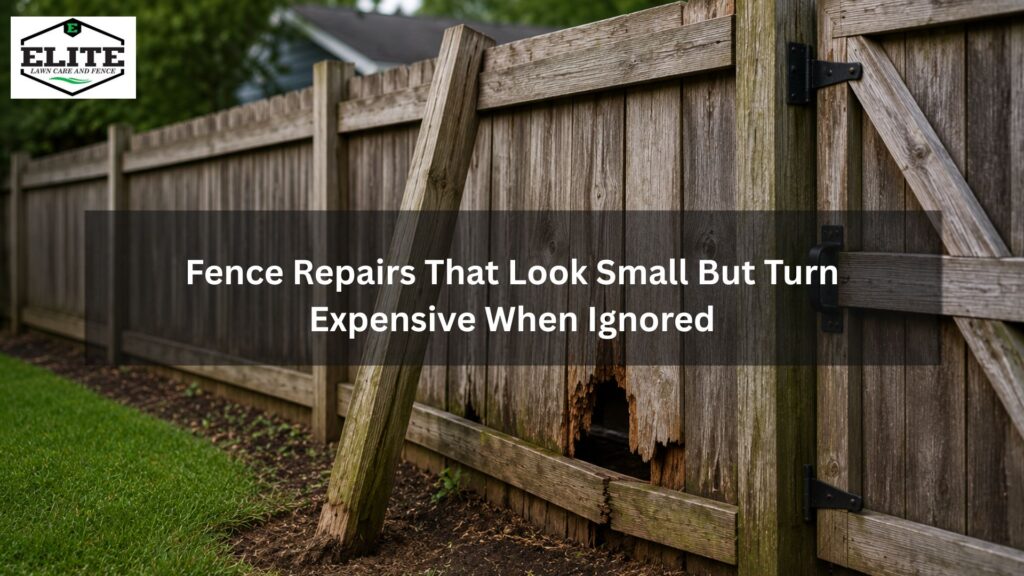
A loose board, crooked gate, or slightly leaning post may not seem urgent at first. The fence is still standing. The yard still looks enclosed. The problem feels small enough to deal with later.
That is where many fence repairs start getting more expensive.
Small fence problems can spread when they put extra pressure on nearby posts, rails, gates, panels, and hardware. A simple repair can turn into a larger section replacement if the issue is ignored too long.
For Marion homeowners, this matters even more when the yard has slopes, rain runoff, soft soil, pets, or older wood fencing. What looks minor today can become a bigger problem after the next storm, mowing season, or repeated gate use.
Key Takeaways
- Small fence issues can become larger when they are ignored.
- Leaning posts, dragging gates, loose boards, and soft wood should be checked early.
- Gate problems often put extra stress on nearby posts and fence sections.
- Repair is usually easier when the damage is limited to one area.
- Waiting too long can turn a simple repair into partial or full fence replacement.
A Leaning Post Is Not Just a Cosmetic Problem
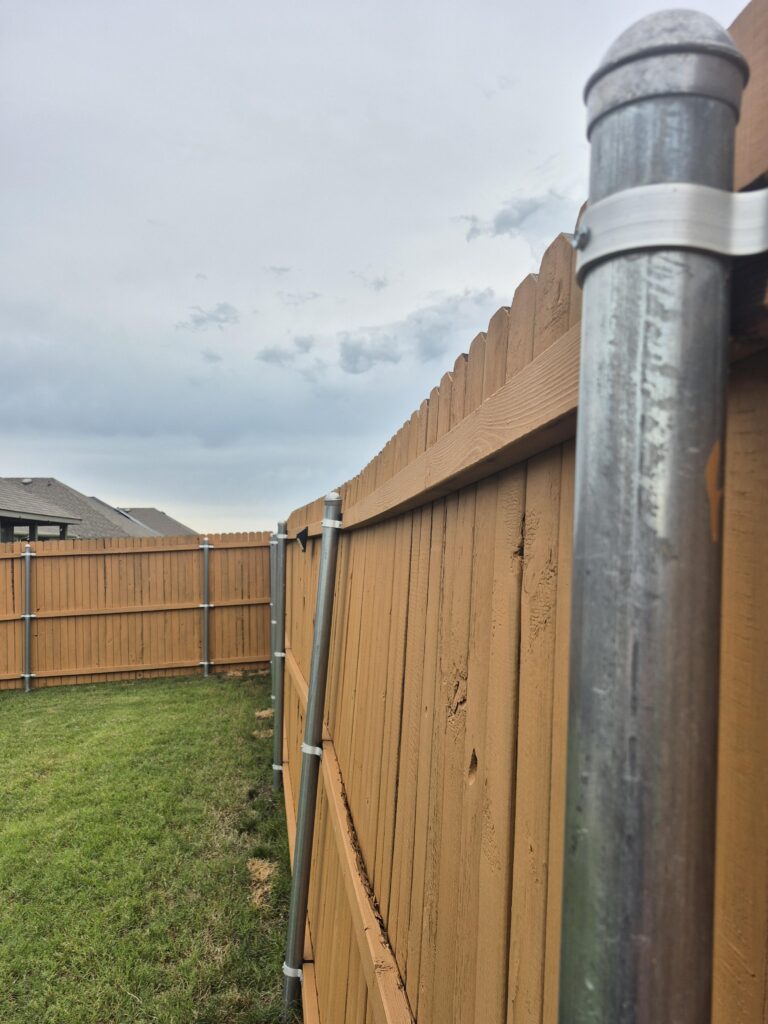
A fence post that leans a little may not look like a big issue. But the post is what supports the fence. If it starts shifting, the sections connected to it can start moving too.
A leaning post can cause:
- Panels to pull out of alignment
- Rails to loosen
- Gates to stop latching
- Nearby posts to take extra pressure
- Gaps to form under or between fence sections
- The fence line to look uneven
This is especially important with privacy fences because solid panels catch more wind than open fencing. If a post is already weak, wind and rain can make the lean worse.
A single leaning post may be repairable if the rest of the fence is still strong. But if several posts are leaning, the issue may be more serious than one bad spot.
A Gate That Drags Can Damage More Than the Gate
A dragging gate is one of those problems homeowners often tolerate for too long. They lift it a little, pull harder, or kick it shut.
That may work for a while, but it does not fix the real issue.
A gate that drags can point to:
- A leaning gate post
- Loose hinges
- A sagging gate frame
- Soil movement under the gate
- Hardware that no longer supports the weight
- A gate opening that was not planned well
The longer the gate drags, the more pressure it can put on the hinges, latch, frame, and post. What starts as a small adjustment may turn into a gate repair, post repair, or full gate replacement.
If the gate is used for dogs, children, trash bins, lawn equipment, or driveway access, it should be fixed before it becomes harder to use.
Loose Boards Can Create Bigger Fence Problems
A loose board may seem harmless, especially if only one or two boards are affected. But loose boards can let more movement into the fence section.
Over time, that movement can affect nearby rails, fasteners, and posts.
Loose boards can also create:
- Privacy gaps
- Pet escape points
- Weak spots during wind
- More exposed edges for water damage
- A rough or neglected appearance
- Safety concerns if boards pull away
For wood privacy fences, the boards are not just decorative. They help create the barrier homeowners rely on for privacy, pets, and backyard use.
If only a few boards are loose, repair may be simple. Waiting until several boards pull away can make the section harder to save.
Soft Wood Near the Ground Should Be Checked Quickly
Wood near the ground often shows problems before the upper part of the fence does. Moisture, soil contact, shade, and poor drainage can all affect lower boards, rails, and posts.
Homeowners should pay attention to wood that feels:
- Soft
- Spongy
- Crumbly
- Dark near the bottom
- Split or breaking apart
- Loose around fasteners
Soft wood near the ground is more serious than faded color. Faded boards may only need cleaning or staining if the structure is still sound. Soft or rotten wood may need repair or replacement.
This is where homeowners can waste money if they only focus on appearance. Staining a weak fence may make it look better for a short time, but it will not make rotten wood strong again.
Rusted or Loose Hardware Can Lead to Bigger Failures
Fence hardware is easy to overlook. Hinges, latches, screws, brackets, and fasteners are small compared to the fence itself, but they help hold everything together.
Loose or failing hardware can cause:
- Gates to sag
- Latches to miss
- Boards to pull away
- Rails to loosen
- Sections to shift
- Gaps to widen
A loose hinge may be a simple repair. A missing bracket may be easy to replace. But if hardware failure is ignored, the fence section may start carrying weight incorrectly.
This is especially true around gates. A gate with weak hardware can quickly become a post problem.
Chain Link Sagging Can Spread Along the Fence Line
Chain link fencing can look simple, but it still depends on proper tension and strong posts. If one section starts sagging, the issue can move along the fence line.
Chain link problems that should be checked early include:
- Loose fabric
- Bent bottom edges
- Sagging top rail
- Loose tension wire
- Damaged gate frame
- Posts pulling out of line
- Gaps near the bottom
A small bend at the bottom may not seem like a major repair, but it can become a pet escape point. Loose chain link near a gate can also make the whole entrance weaker.
Chain link repairs are usually easier when the fabric, posts, and gate are still mostly in place. Waiting too long can make the damage harder to isolate.
Vinyl and Aluminum Fences Can Still Need Repairs
Some homeowners think vinyl and aluminum fences do not need repair because they are lower maintenance than wood. They may need less routine upkeep, but they can still have problems.
Vinyl fence issues may include:
- Panels coming loose
- Posts shifting
- Cracked sections
- Gate alignment problems
- Caps or parts coming loose
Aluminum fence issues may include:
- Bent pickets
- Loose rails
- Gate sagging
- Shifting posts
- Damaged sections from impact
With both materials, the post line matters. If the posts shift, the fence may start looking uneven or the gate may stop working correctly.
The earlier these issues are checked, the easier they may be to correct.
Small Pet Gaps Can Become Big Problems
If a fence keeps dogs in the yard, small repairs should not be ignored. Dogs often notice weak spots before homeowners do.
A minor gap can become a serious problem if it is located:
- Under a gate
- Near a low spot
- Along the bottom of chain link
- Beside a loose board
- At a leaning post
- Near a corner
- Where soil has washed out
Once a dog finds an escape point, they may return to it. A small gap can become a digging spot. A loose board can become a pushed-open section. A gate that barely latches can become an easy exit.
For pet owners, fence repair is not just about appearance. It is about keeping the yard secure.
Water Problems Can Make Repairs Worse
Some fence damage keeps coming back because the real issue is water. If water collects along the fence line, repairs may not last as long as they should.
Water-related warning signs include:
- Muddy soil around posts
- Standing water near the fence
- Soil washing away under the fence
- Wood staying wet near the bottom
- Gate areas becoming uneven after rain
- Low spots getting deeper over time
If one section keeps needing repair after rain, the problem may be the location, drainage, or ground movement. Fixing the visible damage without understanding why it happened may only solve the issue for a short time.
In Marion yards with slopes or uneven ground, this is especially important.
Repairs Are Easier When the Damage Is Isolated
The best time to fix a fence problem is when it is still small and limited to one area.
Repair is usually more manageable when:
- One board is loose
- One gate latch is off
- One hinge needs attention
- One post has shifted slightly
- One chain link section is bent
- One rail is cracked
- One small area has storm damage
At this stage, the fence may still be structurally sound. A targeted repair can restore function without replacing large sections.
Waiting too long can allow the problem to spread. A loose board can affect a rail. A bad gate can stress a post. A leaning post can pull on nearby panels. That is how small repairs become bigger projects.
When the Problem May Be Bigger Than It Looks
Some fence problems look small from a distance but point to a deeper issue.
The problem may be bigger if:
- Several posts are leaning
- The fence moves when pushed
- The same gate keeps sagging
- Wood feels soft near the ground
- Multiple boards are pulling away
- Chain link is loose across a long section
- Repairs keep failing
- The fence no longer keeps pets secure
- Water keeps collecting in the same area
- Sections are no longer aligned
In these cases, patching one spot may not solve the problem. The fence may need a larger repair, partial replacement, or a new layout.
Quick Homeowner Fence Check
Homeowners can catch many repair issues with a simple walk around the yard.
Check these areas:
Posts
Gently push on posts and sections. They should not move easily.
Gates
Open and close every gate. Check if the latch lines up and the gate clears the ground.
Boards
Look for loose, cracked, warped, or soft boards.
Rails
Check if rails are pulling away from posts or sagging.
Hardware
Look at hinges, latches, screws, brackets, and fasteners.
Bottom gaps
Check under gates, along slopes, and where soil has washed out.
Fence line
Stand back and look down the fence line. Leaning or uneven sections are easier to see from a distance.
Pet escape points
Look low. Dogs and small pets find gaps homeowners often miss.
Common Repairs Homeowners Wait Too Long to Fix
These are the small issues that often become bigger:
- A gate that barely latches
- One leaning post
- A cracked rail
- A loose privacy board
- Chain link bent at the bottom
- Soft wood near the ground
- A missing screw or bracket
- Soil washed out under the fence
- A section that moves slightly
- A gap where the dog keeps digging
None of these problems should cause panic. But they should not be ignored either.
Repair, Partial Replacement, or Full Replacement?
Not every problem needs the same solution.
Repair may be enough if:
- The issue is limited to one area
- Posts are mostly solid
- The gate can be adjusted
- Boards or rails are still mostly sound
- The fence line is straight
- The damage is recent or isolated
Partial replacement may make sense if:
- One side of the fence is worse than the rest
- A gate area is failing
- A storm damaged one section
- Several connected panels are weak
- The rest of the fence still has life left
Full replacement may be better if:
- Many posts are failing
- Repairs are becoming frequent
- Wood is rotting in several areas
- The fence no longer provides privacy or security
- The layout no longer works for the property
- Pets can escape from multiple spots
A good decision starts with checking the structure, not just the surface.
Mistakes to Avoid With Fence Repairs
Avoid these common mistakes:
- Ignoring a gate that does not latch
- Replacing boards without checking the rails
- Staining over rotten wood
- Fixing a gate without checking the post
- Ignoring water pooling near the fence
- Waiting until pets escape
- Assuming one leaning post is harmless
- Repairing the same section repeatedly without asking why it keeps failing
- Choosing full replacement before checking if partial repair could work
- Judging the fence only by how it looks from the house
A fence repair should solve the actual problem, not just cover it for a few weeks.
When to Call a Fence Contractor
It may be time to call a fence contractor if:
- A gate will not close correctly
- A post is leaning or loose
- Wood feels soft near the ground
- Several boards or rails are damaged
- Chain link is sagging or bent
- A storm damaged part of the fence
- Pets are finding escape points
- Water keeps affecting the same area
- You are unsure whether repair or replacement makes more sense
A contractor can check the posts, panels, gates, hardware, and layout to recommend the right fix.
Final Thoughts
Small fence repairs often become expensive when they are ignored. A loose board, dragging gate, leaning post, soft wood spot, or bent chain link section may seem minor at first, but each one can put extra stress on the rest of the fence.
The earlier the problem is checked, the easier it may be to repair. Waiting too long can turn a simple fix into partial replacement or a full new fence.
Elite Lawncare and Fence helps Marion homeowners inspect fence damage, repair weak sections, fix gate problems, and decide when replacement makes more sense. Whether the issue is wood fence repair, chain link repair, gate repair, or storm damage, the goal is to fix the problem before it spreads.