
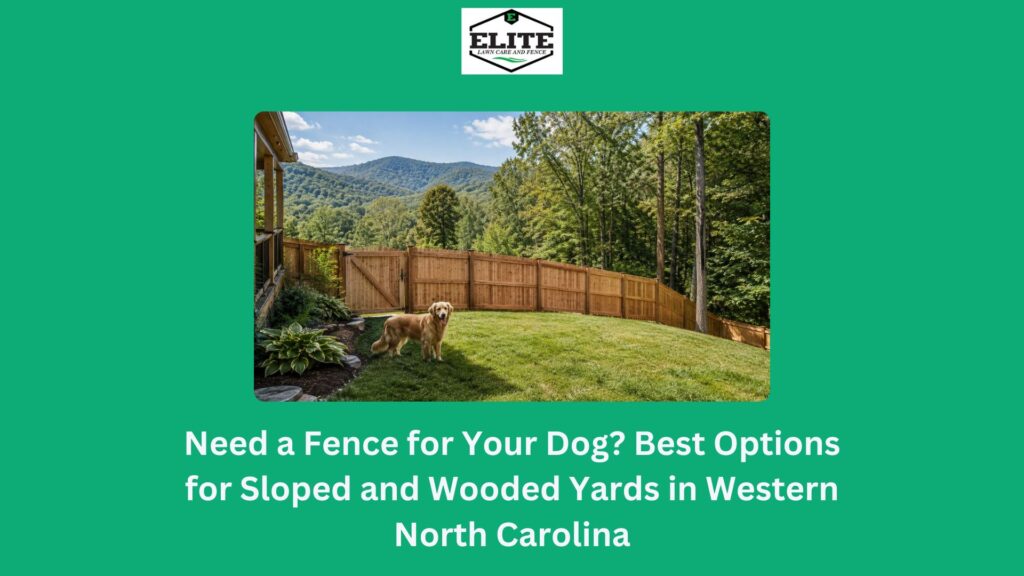
The best dog fence is not always the tallest or most expensive option.
A dog that jumps, digs, squeezes through narrow gaps, or reacts to passing animals may need a different fence than a calm dog that simply needs a clear backyard boundary. The yard matters too. Slopes, tree roots, wooded edges, and uneven ground can create openings that are easy to miss during planning.
Before choosing wood, vinyl, aluminum, or chain-link fencing, start with the problem the fence needs to solve.
Key Takeaways
- Choose a fence based on your dog’s size, habits, and behavior.
- Privacy fencing can reduce visual triggers for reactive dogs.
- Sloped yards need careful planning to prevent gaps underneath the fence.
- Aluminum and chain-link preserve visibility but may not suit every dog.
- Gates and low points along the fence line deserve extra attention.
Start With Your Dog, Not the Fence Material
A fence that works well for one dog may not work for another.
Before comparing materials, consider how your dog behaves outside.
Ask yourself:
- Does your dog jump when excited?
- Does it dig along the property line?
- Can it squeeze through narrow openings?
- Does it chase wildlife?
- Does it bark at people, vehicles, or neighboring dogs?
- Does it push against gates?
- Will more than one dog use the yard?
These answers help determine whether you need more height, less visibility, tighter spacing, stronger gates, or closer ground clearance.
Wood Privacy Fencing for Dogs That Need Less Distraction
A wood privacy fence creates a solid visual barrier between the dog and activity outside the yard.
This can be useful for dogs that become excited by:
- People walking past
- Neighboring pets
- Wildlife
- Vehicles
- Movement near the property line
Wood also offers flexibility. Boards can often be adjusted to follow changes in the yard more closely than prefabricated panel systems.
However, wood requires routine care. Boards may warp, split, or weaken over time if the fence is not maintained. Homeowners should also inspect the bottom edge for digging, rot, or new gaps caused by erosion.
Wood may be a good fit when privacy and design flexibility are major priorities.
Vinyl Privacy Fencing for a Solid, Low-Maintenance Barrier
Vinyl privacy fencing also blocks most outside views, making it another option for easily distracted or reactive dogs.
Homeowners often consider vinyl because it has a consistent appearance and does not require painting or staining. Routine cleaning may still be needed, especially near wooded areas where dirt, pollen, and organic debris can collect.
The main challenge is the yard’s grade.
Vinyl systems use larger panels, so changes in elevation must be planned carefully. On a steep or uneven property, stepped sections may leave spaces underneath if the layout is not designed with the dog in mind.
Vinyl can work well, but the installer needs to understand where low points and slope changes may create escape opportunities.
Aluminum Fencing When You Want to Keep the View
Aluminum fencing can provide a defined boundary without blocking mountain views, landscaping, or open areas of the yard.
It may suit dogs that do not react strongly to outside movement and are unlikely to squeeze through the pickets.
Before choosing aluminum, check:
- Spacing between pickets
- Clearance underneath the fence
- Fence height
- Changes in ground elevation
- Gate spacing and alignment
Small dogs may fit through openings that would not be a concern for a larger dog. A dog that frequently reacts to animals or people outside the yard may also remain overstimulated because the fence does not block the view.
Aluminum is attractive and open, but it should be selected based on the dog’s behavior rather than appearance alone.
Chain-Link Fencing for Larger Enclosures
Chain-link fencing is a practical option for homeowners who need to enclose a larger area without installing a solid privacy fence.
It provides visibility and can be used on many residential properties. Coated chain-link may also blend more naturally into wooded surroundings than traditional galvanized material.
Chain-link may be worth considering when:
- The yard is large
- Visibility is preferred
- The dog is too large to fit through the mesh
- Privacy is not the main goal
- The fence needs to follow changing terrain
The open design may not be ideal for dogs that react to outside activity. Some dogs may also try to climb or dig near the bottom, so their behavior should be considered before installation.
How Sloped Ground Changes the Fence Plan
Slopes are one of the biggest challenges when fencing a yard for a dog.
A fence may look level from a distance while still having a large gap at the lowest point. That gap may be enough for a small dog to crawl through or for a determined dog to begin digging.
Two common installation approaches are:
Stepped fencing
Each fence section remains level, creating a stair-step appearance down the slope.
This can work well visually, but gaps may form underneath the lower side of each section. Those areas need to be reviewed carefully.
Fence that follows the terrain
The fence moves with the natural grade of the yard.
This approach may reduce large bottom gaps, although the final appearance and installation method depend on the material.
The best layout depends on the slope, fence style, and size of the dog.
What to Check Along a Wooded Property Line
Wooded yards create additional concerns that may not be obvious during the first measurement.
Look for:
- Large tree roots near the proposed fence line
- Brush that could hide gaps
- Low spots where water collects
- Fallen limbs
- Wildlife paths
- Soft ground near drainage areas
- Trees that may need future maintenance
Fence posts may need to be adjusted around major roots. Dense brush should also be cleared far enough to inspect and maintain the fence after installation.
Avoid placing a new fence where a damaged or unstable tree could easily fall across it.
Do Not Overlook the Gate
The gate is often the part of a dog fence that gets the most use and the most pressure.
A poorly planned gate may drag, stop latching, or leave too much space underneath.
When choosing the gate location, consider:
- Whether the ground is level
- How the gate will swing
- The size of the opening
- How quickly it needs to close
- Whether lawn equipment must pass through
- Where the latch will be positioned
- Whether the dog pushes or jumps at gates
A wide gate may be useful for equipment, but it needs proper support. A gate installed across a steep section may also be difficult to open without excessive bottom clearance.
Match the Fence to the Dog and Yard
| Situation | Fence option to consider |
| Dog reacts to people or wildlife | Wood or vinyl privacy fence |
| Homeowner wants to preserve the view | Aluminum fencing |
| Large area needs to be enclosed | Chain-link fencing |
| Small dog can squeeze through gaps | Solid panels or narrow picket spacing |
| Dog frequently digs | Careful bottom-clearance and grade planning |
| Yard has major elevation changes | Custom terrain-based layout |
| Property has a wooded boundary | Material with accessible maintenance space |
This table is a starting point, not a guarantee. No fence should be described as completely escape-proof. Dogs still need supervision, and the fence should be inspected regularly for damage or changing ground conditions.
Questions to Ask Before Requesting an Estimate
A contractor can recommend a better layout when you provide specific information about the dog and property.
Be ready to discuss:
- The dog’s breed, size, and general behavior
- Whether the dog jumps or digs
- The part of the yard you want enclosed
- Your preferred amount of privacy
- Gate width and placement
- Slopes and wooded areas
- Future patios, sheds, or landscaping
- Any existing fence that must be removed
Photos can help, but an on-site visit is often needed to identify roots, low points, drainage paths, and access limitations.
Choose a Fence That Fits the Whole Property
A successful dog fence should work with the dog, the yard, and the homeowner’s priorities.
Privacy fencing may help reduce distractions. Aluminum can preserve the view. Chain-link can enclose a larger area. The final choice should also account for slopes, roots, drainage, gates, and places where the ground may change over time.
Elite Lawncare and Fence can inspect your Marion-area property and recommend a layout based on your dog’s needs, the terrain, and the amount of privacy you want.