
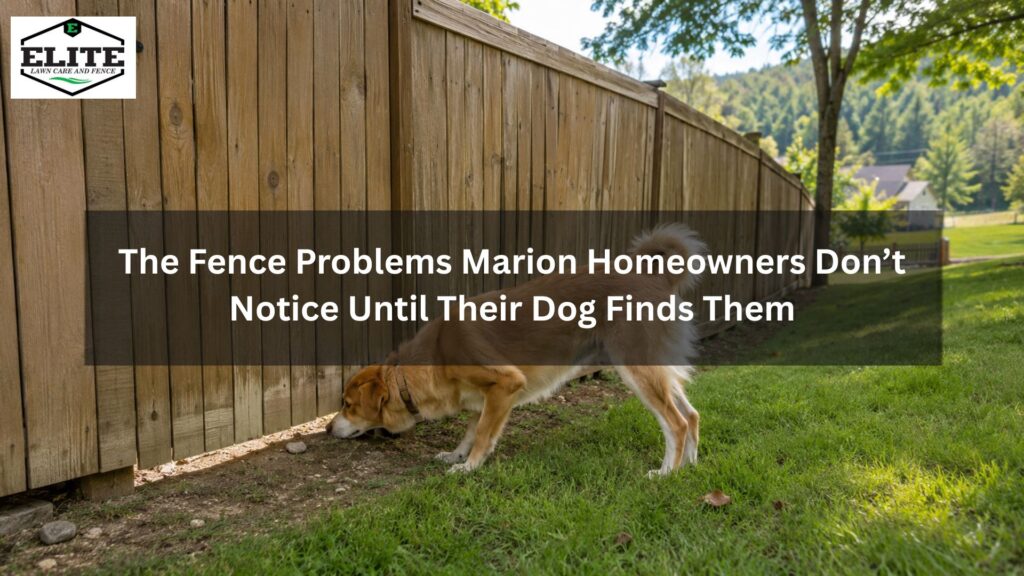
Most homeowners do not inspect every inch of their fence after work, after mowing, or after a storm.
Dogs do.
A small gap under the gate, a loose board, a bent section of chain link, or a weak spot near the ground may not look like much at first. But if your dog is curious, anxious, strong, or determined, that small fence problem can turn into an escape route.
For Marion homeowners, a dog-safe fence is not just about height. It is about the whole layout: gates, posts, bottom gaps, latches, slopes, soil, and weak sections that are easy to miss until your dog finds them first.
Key Takeaways
- Dogs often find fence gaps, loose gates, and weak spots before homeowners notice them.
- The most common escape points are under gates, near low spots, and around damaged fence sections.
- A fence for dogs should be planned around behavior, not just height.
- Chain link, wood, vinyl, and privacy fencing can all work, but the layout has to match the dog and yard.
- Some dog fence problems can be repaired, while repeated escapes may mean the fence needs a better design.
Dogs Find Weak Spots Fast
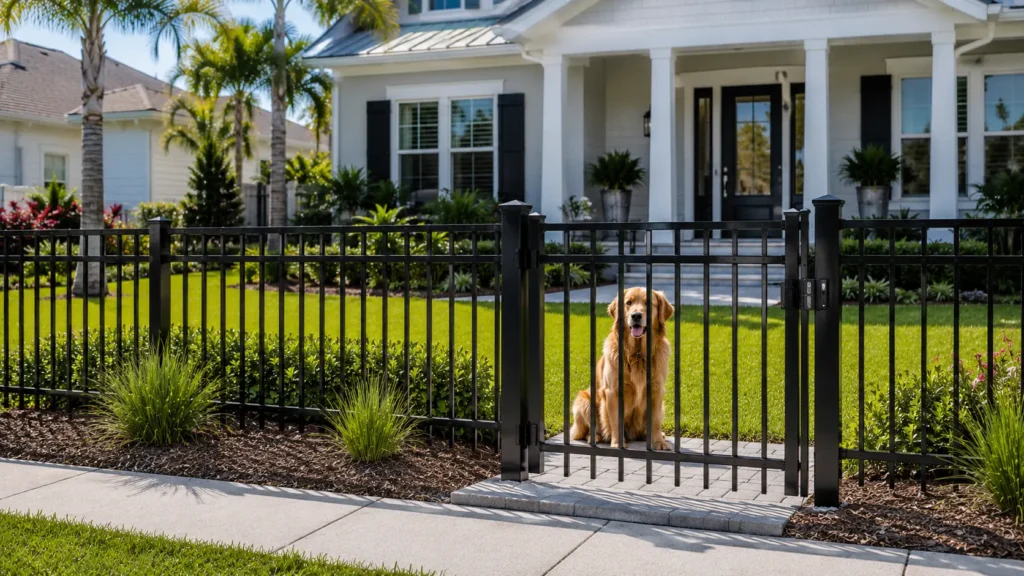
A fence can look fine from the patio and still have problems at ground level. Dogs notice the parts homeowners often miss because they spend more time near the fence line.
Some dogs dig. Some push. Some jump. Some squeeze through small openings. Others watch the gate until they learn where it moves or where the latch does not catch well.
Common weak spots include:
- Gaps under gates
- Loose boards near the bottom of a wood fence
- Bent chain link along the ground
- Low spots where the yard dips
- Corners where the fence does not meet tightly
- Gate latches that do not close cleanly
- Sections that move when pushed
- Openings around posts
A dog does not need a large opening to start a problem. Once they find one weak spot, they may keep going back to it.
That is why dog fencing should be checked from the dog’s level, not just from a distance.
The Gate Is Usually the First Problem Area
If a dog escapes from a fenced yard, the gate is one of the first places to check.
Gates move more than the rest of the fence. They open, close, swing, latch, and carry weight every day. Over time, a gate can sag, shift, drag, or stop lining up correctly.
A gate can become a problem if:
- The latch does not fully catch
- The gate post starts leaning
- The bottom of the gate leaves a wide gap
- The hinges are loose
- The gate drags on the ground
- The gate swings open too easily
- The space between the gate and post is too wide
For small dogs, even a narrow side gap may be enough. For larger dogs, a weak latch or loose gate can become the issue. A strong dog may push against the gate until the latch gives, especially if they see another animal, person, or vehicle outside the fence.
A dog-safe gate should close securely, latch properly, and leave no easy escape point at the bottom or sides.
Low Spots Under the Fence Can Become Escape Routes
Marion yards are not always flat. Some properties have slopes, dips, drainage areas, soft soil, or uneven ground along the fence line. These low spots can create gaps under the fence.
At first, the gap may not look serious. But for a dog, it can become the perfect place to dig, crawl, or push through.
Low spots are especially common:
- Near drainage paths
- Along sloped yards
- Around older fence lines
- Under gates
- Near tree roots
- Where soil has washed out
- At corners or transitions between fence sections
A fence that works well on flat ground may need extra planning on uneven ground. The bottom gap matters just as much as the fence height.
If the fence is being installed for dogs, homeowners should look closely at the bottom edge. A tall fence does not help much if the dog can get under it.
Loose Boards Can Create Openings
Wood fences can be great for privacy and dog containment, but older wood sections need attention. A loose board may not seem urgent until a dog starts pushing on it.
Wood fence problems that can affect pet safety include:
- Loose pickets
- Cracked boards
- Broken rails
- Rotten wood near the ground
- Nails or screws backing out
- Boards pulling away from the frame
- Sections that move when pushed
A dog may test the same weak board again and again. Over time, a small loose area can become a larger opening.
If the fence is older, homeowners should walk the fence line and gently check any section that looks loose, warped, or soft. A repair may be simple if the issue is caught early. Waiting too long can allow the damage to spread to nearby boards, rails, or posts.
Bent Chain Link Can Be Easy to Miss
Chain link fencing is often used for dogs because it creates a clear boundary while keeping the yard open. But chain link can still have weak points.
The bottom edge is one of the most important areas to check.
Dogs may find problems where:
- The chain link fabric is bent upward
- The bottom is loose near the ground
- The fence has pulled away from a post
- The gate does not meet the fence tightly
- The tension is loose
- A corner has shifted
- The ground under the fence has washed out
A small bend at the bottom of a chain link fence can become an escape point for a persistent dog. Larger dogs may push against weak areas. Smaller dogs may squeeze under or through gaps.
For dog containment, chain link needs more than just proper height. It needs secure edges, stable posts, tight gates, and a layout that fits the yard.
Fence Height Is Not the Only Thing That Matters
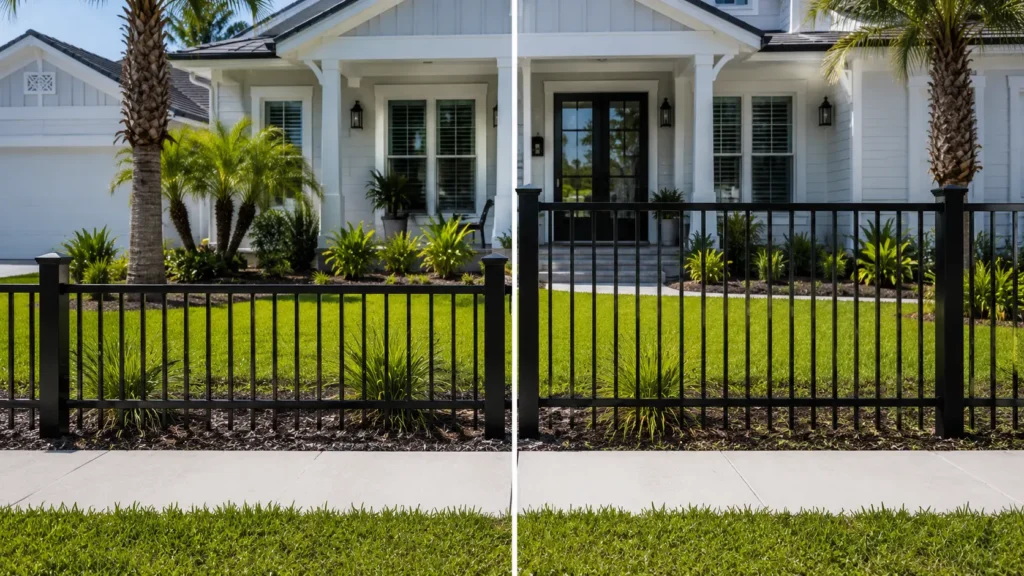
Many homeowners focus first on fence height. Height matters, especially for dogs that jump. But height is only one part of a dog-safe fence.
A tall fence can still fail if:
- The gate latch is weak
- The bottom gap is too large
- The dog can dig under it
- Boards are loose
- Chain link is bent
- The fence post is leaning
- The gate does not close properly
- The dog can climb or use objects near the fence
Before choosing a fence height, homeowners should think about their dog’s behavior.
Ask:
- Does the dog dig?
- Does the dog jump?
- Does the dog push on gates?
- Does the dog react to people walking by?
- Does the dog chase cars, wildlife, or other pets?
- Is the dog small enough to squeeze through gaps?
- Does the dog spend time near one part of the fence?
A calm small dog and a strong, reactive large dog may need very different fence plans.
Privacy Fence Can Help With Dogs That React to Movement
Some dogs escape because they are curious. Others try to get out because they see something.
A dog may react to:
- People walking by
- Other dogs
- Cars
- Wildlife
- Neighbors in nearby yards
- Delivery drivers
- Children playing
- Movement along the street
For dogs that react strongly to outside movement, a privacy fence may help reduce visual triggers. Wood or vinyl privacy fencing can block the view and make the yard feel calmer for some pets.
Privacy fencing may be helpful if:
- The dog barks at every passerby
- The yard faces a street
- The dog reacts to neighbors
- The dog runs the fence line
- The dog jumps when seeing movement
- The homeowner wants more privacy for the family too
Privacy fencing is not always the answer for every dog, but it can be useful when visibility is part of the problem.
Chain Link Can Still Be a Good Dog Fence
Chain link should not be dismissed. For many homeowners, it is a practical dog fence option, especially when the goal is to create a clear boundary without closing off the yard.
Chain link may work well if:
- The dog does not react strongly to outside views
- The homeowner wants visibility
- The yard is large
- The fence line is long
- The main goal is containment
- The homeowner wants a practical boundary
Black chain link can also look cleaner and less industrial than older galvanized styles. It can blend better with grass, trees, and landscaping.
The key is proper installation. A chain link fence for dogs should have secure posts, strong gates, tight fabric, and careful attention to the bottom edge.
Wood and Vinyl Can Work Well for Dog Privacy
Wood and vinyl fences are often chosen when homeowners want both pet containment and privacy. They can help block views, reduce distractions, and create a more enclosed backyard.
Wood fencing may be a good fit for homeowners who want:
- A natural look
- Privacy
- Flexible design options
- A fence that can be stained
- A warmer style for the yard
Vinyl fencing may be a good fit for homeowners who want:
- A clean appearance
- Solid privacy panels
- Simple maintenance
- A uniform look
- A bright, finished backyard style
Both can work for dogs, but the details still matter. Gates, post strength, bottom gaps, and layout are just as important as the fence material.
A solid fence that is poorly installed can still become a problem. A simple fence that is well planned can often do a better job.
Sloped Yards Need Extra Planning
A sloped yard can make dog fencing more challenging. If the fence follows the slope poorly, it may leave gaps underneath. If it steps down too sharply, some areas may be easier for dogs to get under or around.
Sloped yards need planning around:
- Bottom gaps
- Fence height changes
- Gate placement
- Drainage
- Low corners
- Post stability
- Areas where dogs may dig
Gates are especially important on slopes. A gate installed on uneven ground may drag, leave a larger gap, or stop latching correctly over time.
If the yard has a slope, the fence should be planned around how the dog will use the space. The goal is to avoid giving the dog easy access to low points, weak corners, or poorly aligned gates.
Signs Your Fence Is Not Dog-Safe
A fence may need repair or adjustment if you notice:
- Your dog keeps sniffing, digging, or pushing at the same spot
- The gate does not latch smoothly
- There is a visible gap under the gate
- The fence moves when pushed
- Boards are loose or broken
- Chain link is bent near the bottom
- The dog can see too many outside triggers
- Soil has washed out under the fence
- The gate post is leaning
- The latch area has a wide gap
- The dog has escaped before
One escape attempt should be taken seriously. Once a dog learns where the weak spot is, they may keep trying it.
How to Check Your Fence Like a Dog Would
Homeowners can do a simple fence check from the dog’s point of view.
Walk the fence line slowly and look low.
Check:
- Under each gate
- Along the bottom of the fence
- Around each post
- At corners
- Where the yard slopes
- Where water drains
- Near trees and roots
- Any section your dog visits often
- Any area that feels loose
- Any latch or hinge that does not work smoothly
Then open and close every gate. A gate should latch without forcing it. It should not drag, swing open, or leave a wide bottom gap.
Also look for behavior clues. If your dog keeps going back to the same area, there may be a reason.
Repair or Replace: What Makes Sense?
Some dog fence problems can be fixed with targeted repair. Others may mean the fence needs a new layout, stronger gate, or full replacement.
Repair May Be Enough If:
- One gate latch needs adjustment
- A few boards are loose
- One chain link section is bent
- One low spot needs attention
- One post has shifted slightly
- The rest of the fence is solid
- The dog has not repeatedly escaped from multiple areas
Small repairs can make a big difference when the fence is mostly in good shape.
Replacement or Redesign May Be Better If:
- The dog keeps escaping from different spots
- Several posts are leaning
- The fence has large bottom gaps
- The gate is too weak or too narrow
- Wood is rotting near the ground
- Chain link is loose across long sections
- The fence height does not match the dog’s behavior
- The layout does not fit the yard
If the same problems keep coming back, the issue may not be one broken part. It may be the fence design.
Common Dog Fence Mistakes
Homeowners often mean well, but small planning mistakes can lead to big pet problems.
Avoid these common mistakes:
- Choosing fence height without checking bottom gaps
- Ignoring gate latch quality
- Installing a gate where the ground is uneven
- Assuming chain link is secure just because it is tall
- Using privacy fencing without planning gate access
- Forgetting that small dogs can squeeze through narrow openings
- Waiting too long to repair a loose board
- Leaving soil washout under the fence
- Not checking the fence after storms
- Choosing material before thinking about the dog’s behavior
A good dog fence is not just a fence around the yard. It is a fence that matches the dog, the property, and the weak spots that could lead to an escape.
Questions to Ask Before Installing a Fence for Your Dog
Before choosing a fence, ask:
Does my dog dig?
If yes, bottom gaps and low spots matter more.
Does my dog jump?
Fence height and nearby objects become more important.
Does my dog push on gates?
Gate posts, latches, hinges, and hardware need extra attention.
Does my dog react to people or animals outside the yard?
A privacy fence may help reduce visual triggers.
Is my yard flat or sloped?
Slopes can create gaps and gate problems.
Where does my dog spend the most time?
The fence layout should account for your dog’s usual paths and favorite spots.
Do I need full privacy or just secure containment?
Not every dog fence needs to be solid. The right choice depends on the dog and the yard.
Final Thoughts
Dogs are good at finding fence problems homeowners miss. A small gate gap, loose board, bent chain link section, or low spot under the fence may not look serious until your dog turns it into an escape route.
The best fence for dogs is not just the tallest fence. It is the fence that handles the dog’s behavior, the yard’s layout, the gate placement, and the weak points near the ground.
Elite Lawncare and Fence helps Marion homeowners repair weak fence sections, fix gate problems, close escape points, and choose fence layouts that work better for dogs and families. Whether the yard needs chain link, wood, vinyl, privacy fencing, fence repair, or a custom gate, the goal is simple: keep the yard secure and make the fence fit how the property is actually used.