
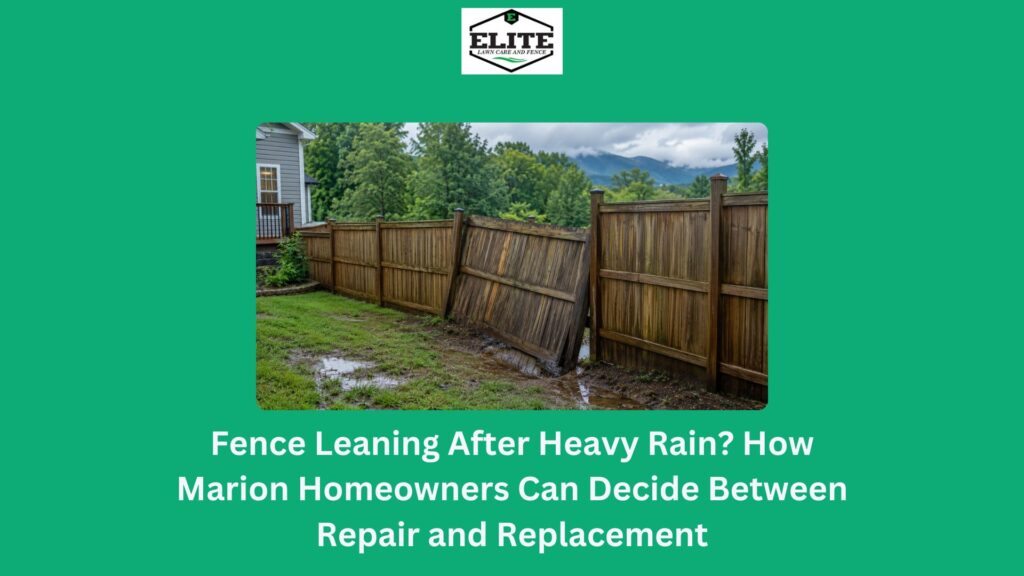
A fence that starts leaning after heavy rain may have one loose post—or a larger problem affecting several sections.
The lean itself does not always reveal how serious the damage is. A fence can look dramatically out of line because one post shifted, while a fence with only a slight lean may have rot or movement along the entire run.
Before pushing the fence upright or replacing a few boards, check where the movement starts and whether the surrounding posts are still stable.
Key Takeaways
- Heavy rain often exposes fence problems that were already developing.
- One loose post or damaged panel may be repairable.
- Several leaning posts, widespread rot, or recurring movement may justify replacement.
- Gate alignment can reveal whether a supporting post has shifted.
- The source of erosion or drainage should be addressed before rebuilding the same section.
Why Does a Fence Lean After Heavy Rain?
Rain does not automatically ruin a properly installed fence. However, saturated ground and runoff can expose weaknesses around posts that were already loose, damaged, or poorly supported.
A fence may begin moving after rain because:
- Soil washed away from around a post
- An older post has started rotting near ground level
- Water repeatedly collects along the fence line
- A slope directs runoff toward one section
- Tree roots or ground movement have shifted a footing
- Strong wind placed extra pressure on wet, unstable ground
Sometimes the visible problem appears overnight. In other cases, the fence may have been slowly leaning for months and the recent weather made the movement more noticeable.
Start by Finding Where the Movement Begins
Do not judge the entire fence from the most tilted panel. Follow the fence line and look for the first point where the posts stop being straight.
Check the following areas:
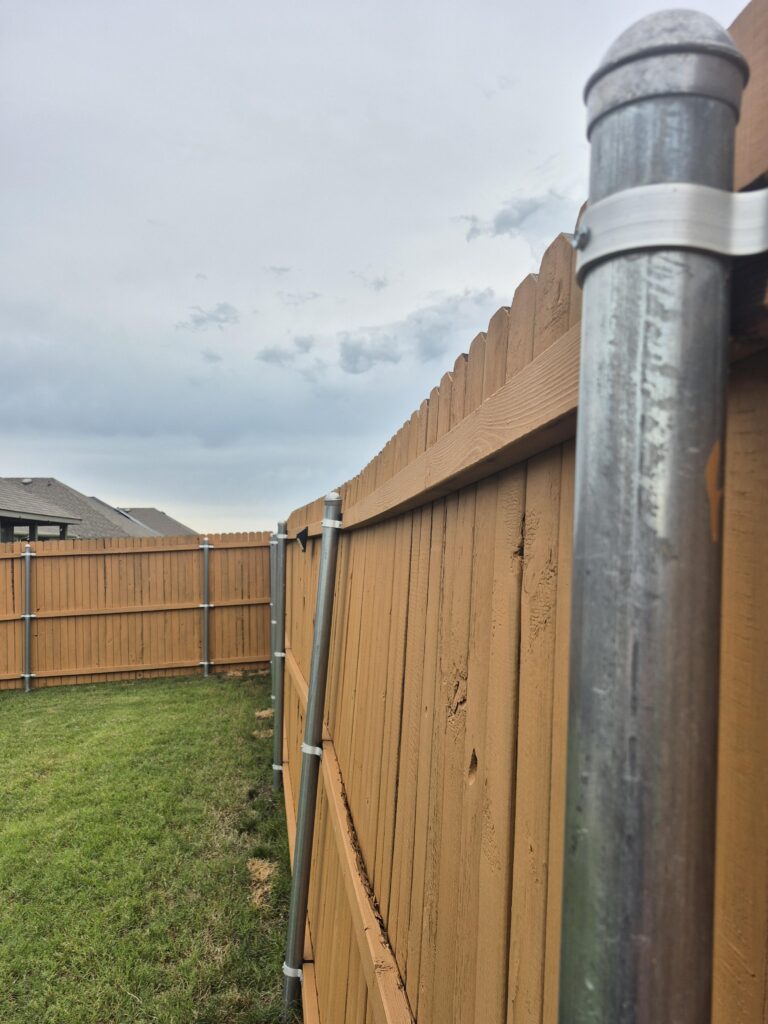
Post bases
Look for gaps between the post and surrounding soil. A post that moves when lightly pushed may have lost support underground.
For wood fencing, inspect the area near ground level for soft wood, cracking, or decay.
Rails and panels
A panel may lean because the rails have pulled away from an otherwise stable post. This may be easier to repair than a failed footing.
Check for loose fasteners, split rails, detached panels, and boards that are placing extra weight on one section.
Gate alignment
A gate that suddenly drags, swings open, or no longer latches can point to movement in the hinge post or latch post.
The gate itself may not be the main problem. Adjusting the hardware will provide only a temporary fix if the supporting post continues to shift.
Soil and drainage
Look for exposed concrete, washed-out soil, small channels created by runoff, or low areas where water collects.
If water continues flowing toward the post, rebuilding the fence without correcting the surrounding problem may lead to the same damage again.
Signs the Fence May Be Repairable
A repair may be practical when the problem is limited to one small area and the rest of the fence remains stable.
Possible repair situations include:
- One loose or damaged post
- One broken panel
- A rail that pulled away from the post
- A gate that needs realignment
- Localized soil erosion
- Minor damage from a fallen branch
- A relatively sound fence with one weak section
A contractor may be able to replace the affected post, reset the footing, reinforce the rails, or rebuild the damaged panel without replacing the entire fence.
The important question is whether the nearby posts and materials are still strong enough to support the repaired section.
Signs Replacement May Make More Sense
Replacing one post at a time may not be cost-effective when the problem extends across several sections.
Consider a broader replacement when you notice:
- Several posts leaning in the same direction
- Rot near the base of multiple wood posts
- Rails separating throughout the fence
- Repeated movement after storms
- Multiple panels no longer lining up
- Widespread cracking, warping, or decay
- A fence that was already near the end of its useful condition
- Previous repairs that continue failing
Replacement may also make more sense when the original installation did not suit the yard. For example, rebuilding several damaged posts in the same drainage path may not solve the underlying issue.
A new layout, stronger post plan, or different material may provide better long-term value than repeatedly patching the same fence.
Repair or Replace? Use This Quick Guide
| Fence condition | Repair may be enough | Replacement may be better |
| One loose post | Yes | Rarely |
| One broken panel | Often | If nearby posts are failing |
| Gate no longer latches | Often | If the gate post keeps moving |
| Several leaning posts | Sometimes | Often |
| Rot at multiple post bases | Unlikely | Usually |
| Fence shifts after every heavy rain | Temporary at best | Worth considering |
| Damage limited to one storm-hit section | Often | If the materials are already weak |
This table is only a starting point. The condition below ground matters just as much as what can be seen above it.
Should You Push the Fence Back Upright?
Avoid forcing a heavy or unstable fence into position without knowing why it moved.
Pushing it back may:
- Pull rails away from nearby posts
- Break already weakened boards
- Cause a panel to fall
- Put additional pressure on a gate
- Hide the problem without fixing the footing
Temporary bracing may help prevent a section from falling, but it should not be treated as a permanent repair.
Keep children and pets away from any fence that moves easily, has exposed nails, or appears close to collapsing.
What to Do Before Calling a Fence Contractor
A few simple steps can make the inspection more useful:
- Take photos of the leaning section and nearby posts.
- Note whether the movement started after a particular storm.
- Check whether the gate still opens and closes.
- Look for runoff or standing water near the fence.
- Identify how many posts appear affected.
- Avoid removing panels unless they create an immediate hazard.
- Keep pets away from gaps or unstable sections.
Tell the fence contractor whether the fence has been repaired before. Recurring damage can help identify whether the problem is limited to the fence or connected to drainage and ground conditions.
Fix the Water Problem Before Rebuilding the Fence
A new post will not stay secure if water continues washing away the surrounding soil.
Depending on the property, the solution may involve redirecting runoff, improving grading, clearing a blocked drainage route, or moving the fence slightly away from a problem area.
Fence contractors do not always perform drainage work, but they should be told about repeated water movement before the repair begins.
This is especially important on sloped or wooded properties where water may travel toward the fence from higher ground.
Get the Fence Checked Before the Damage Spreads
A leaning fence does not always require complete replacement. One failed post, a damaged rail, or a washed-out section may be repairable.
The situation changes when several posts are moving, rot is widespread, or the fence shifts after every round of heavy rain.
Elite Lawncare and Fence can inspect the damaged section, identify whether the problem is isolated, and explain whether repair or replacement makes more sense for your Marion property.